Mechanisms Comparison: Gears vs Belts vs Chains
Power transmission is one of the first decisions in a mechanism. Each option trades off cost, precision, noise, and maintenance.
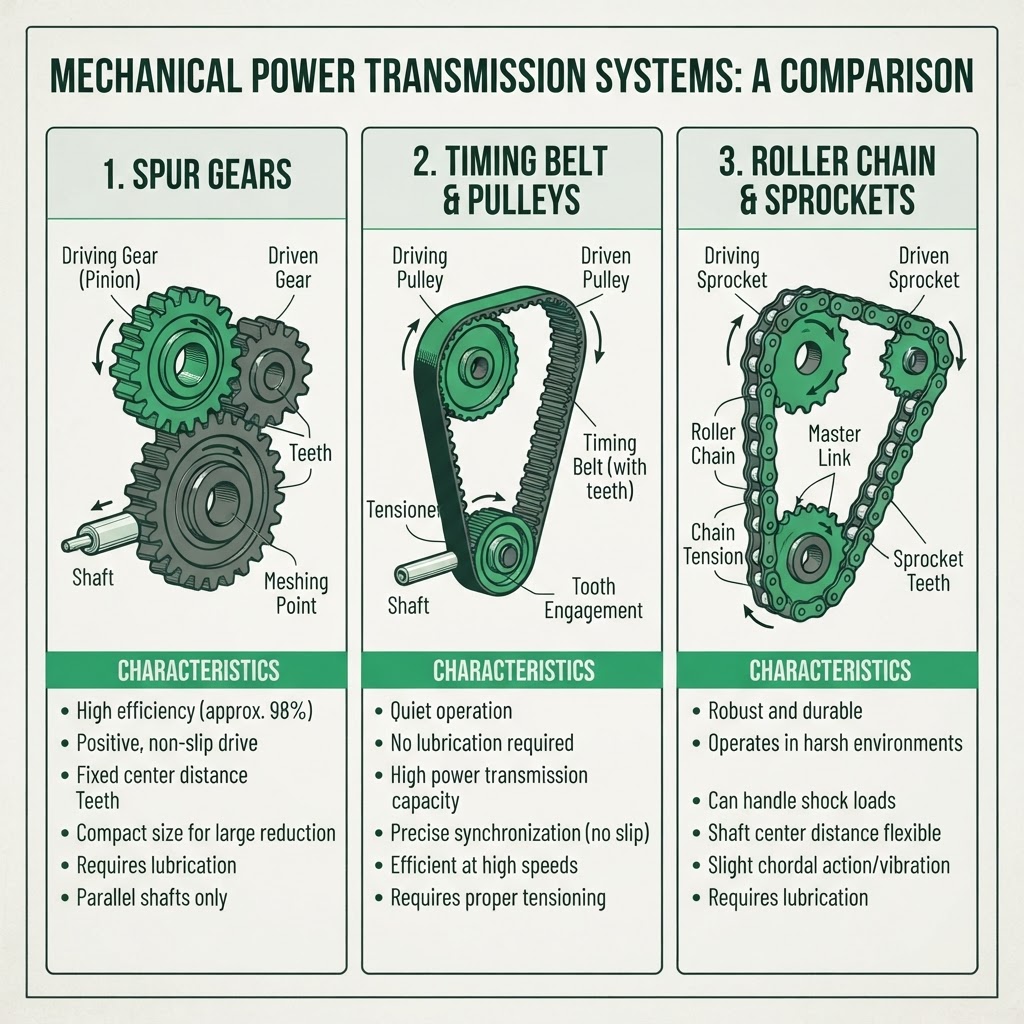
Power transmission is one of the first decisions in any mechanism. Each option trades off cost, precision, noise, and maintenance — and the right choice is always the one that fits the constraints.
How they compare
- Gears — precise, high torque, compact, noisy, expensive, needs lubrication
- Belts — quiet, cheap, absorbs shock, can slip under high load, needs tensioning
- Chains — high torque, no slip, durable, needs lubrication, can stretch over time
For a pita bread line timing, a timing belt gives the precision of gears with the quiet a food environment needs. For a heavy conveyor drive, a chain handles the load. The right choice is never the best in absolute terms — it is the best fit for the constraint.
All designs and intellectual property shown or discussed remain 100% yours. KED signs an NDA and transfers all IP rights to you on paper.
More in Mechanisms
Linkage Mechanisms: The 4-Bar and Beyond
Linkages convert one motion into another using only rigid links and joints — the quiet workhorses of mechanical design.
Cam and Follower Design Basics
Cams produce precise, repeating output motion from a rotating input. When the motion profile must be exact, a cam is often the cleanest answer.