Back to blog
DFM
10 DFM Rules That Cut Cost
Each rule is a small decision that, multiplied across a product, becomes a large saving.
July 25, 2026 4 min read
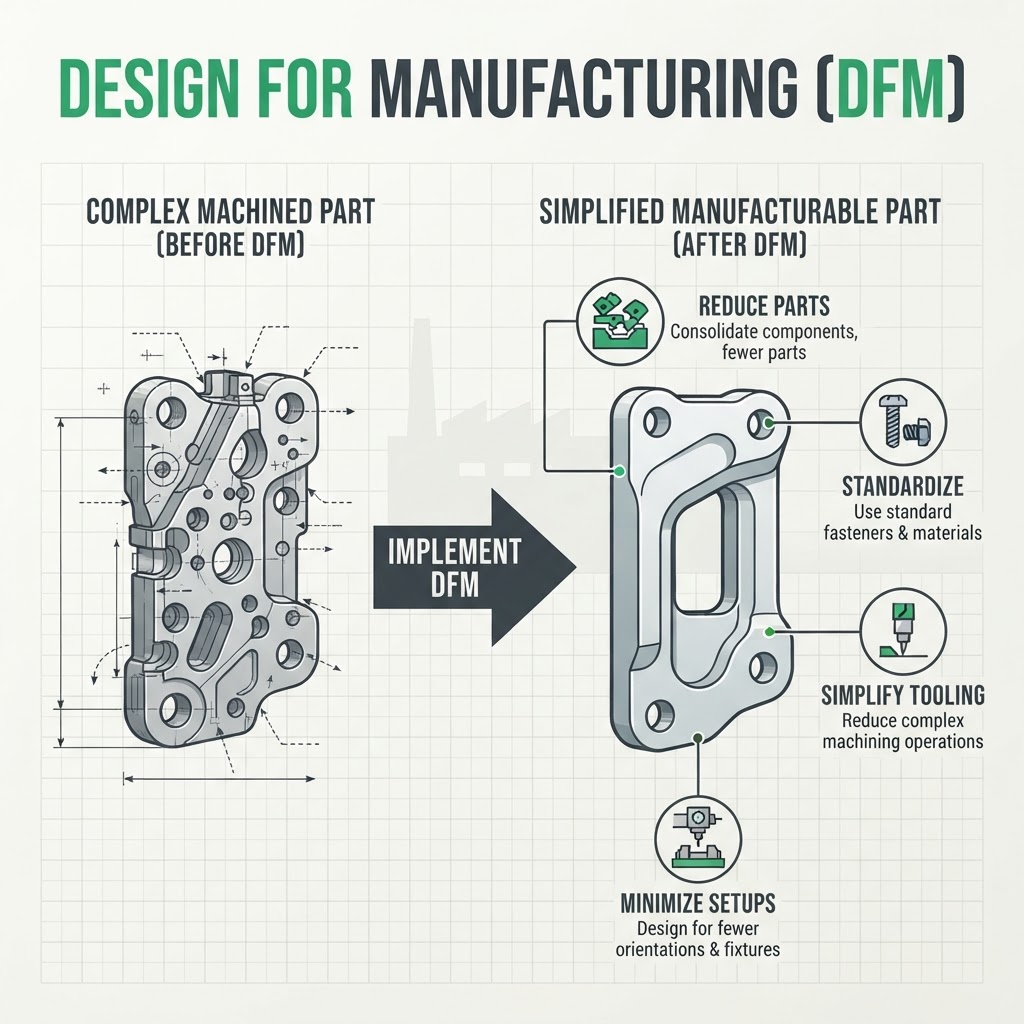
Good DFM is mostly a short list of habits. None of them is clever on its own — the value is in applying all of them, every time.
- 1. Use standard stock sizes where possible
- 2. Design around the tools you actually have
- 3. Put radii on internal corners
- 4. Avoid deep, narrow pockets
- 5. Do it in one setup where you can
- 6. Set tolerances only as tight as function requires
- 7. Reduce part count
- 8. Avoid undercuts that need extra tooling
- 9. Consolidate fasteners
- 10. Design for the chosen process, not against it
Each rule is a small decision that, multiplied across a product, becomes a large saving.
All designs and intellectual property shown or discussed remain 100% yours. KED signs an NDA and transfers all IP rights to you on paper.
Related Articles
More in DFM
5 min read
What is DFM? Design for Manufacturing
DFM means designing a part so it is easy and cheap to make — a mindset applied from the first sketch, not a cleanup at the end.
5 min read
DFM vs DFA: Finding the Balance
DFM asks if each part is easy to make. DFA asks if the whole product is easy to assemble. Sometimes they pull in opposite directions.